What Should You Do if Your Hearing Aid Gets Wet
Summer around Lake Murray has a way of putting you close to water without
We value our patients and want everyone to be safe. We will be happy to see any patient that is in need of our service. Service is our #1 priority!

By: admin | May 18, 2026
For anyone who has ever dug through a drawer looking for a size 312 battery at the wrong moment, the shift to rechargeable hearing aids is a welcome one. Disposable batteries have been the standard for a long time, but they come with a routine that gets old fast.
Keeping extras on hand, remembering to swap them out every few days and doing it all with fingers that don’t always cooperate – it’s a small thing until it isn’t.
What makes the latest rechargeable technology worth discussing is how far battery life has come. A full charge now gets most users through a complete day of use, including streaming, phone calls and everything in between.
That kind of reliability changes how you think about your hearing aids when you’re heading into a long workday, catching a flight or spending a full day out. You simply plug them in at night, and they’re ready to go in the morning.
To get through your day without interruptions, it helps to know when your hearing aids are running low. Most rechargeable models will give you a small sound alert or a light on the charger when it’s time to power up.
If the sound suddenly drops or one turns off, a quick charge is usually all it takes to get things back to normal. Keeping them charged regularly makes a big difference.
Maintaining a simple routine prevents these mid-day interruptions:
Higher-end hearing aids are doing a lot behind the scenes. They’re constantly adjusting to your surroundings, softening background noise and keeping voices easier to follow. All of that takes power to keep things sounding consistent as you move from one place to another.
That’s why battery strength matters. The more your devices are working to adapt in real time, the more energy they use. Rechargeable models use built-in batteries designed to handle that load, so you’re not dealing with sound cutting in and out.
When you choose a more advanced option, you’re getting something that’s built to keep up with you throughout the day without losing performance as the hours go on.
Premium devices use this extra energy to run several sophisticated programs at once:
Current lithium-ion batteries are designed to provide a steady flow of power, keeping your sound quality consistent from morning until night. Older battery styles often lost strength gradually, causing the volume to dip or become fuzzy as the day went on.
With this newer chemistry, the battery maintains a strong voltage until it is time for a recharge. This allows your hearing aids to perform exactly as they should, whether you are at home or out at a busy restaurant.
The stable energy from these batteries allows the internal parts to handle difficult tasks without any lag. Filtering out background noise requires a lot of work that older power sources sometimes struggle to support for long periods.
Because these lithium-ion cells are so efficient, you can enjoy high-quality sound for your entire waking day. Reliable power means you can focus on your conversations instead of worrying about your hearing aids fading out.
Several factors can influence how long each charge lasts in your rechargeable hearing aids. Streaming audio from phones or TVs, using advanced features like noise reduction, and listening at higher volumes can use up battery power more quickly.
If you spend a lot of time in noisy places or make frequent adjustments, you may notice the battery drains faster.
Battery age also affects how long a single charge will last. Over time, all rechargeable batteries lose some ability to hold power. If you notice your hearing aids are not lasting as long as they used to, it may be time to have the batteries checked or replaced by our team.
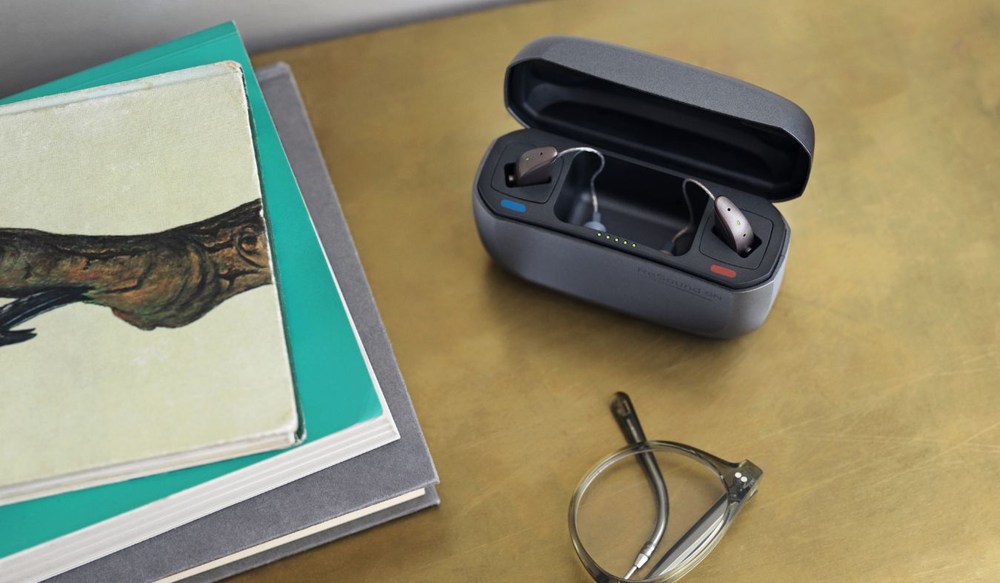
Traveling with rechargeable hearing aids is simple when you treat your charging case as a sturdy protective shell. These cases are built with a hard exterior that shields your devices from being crushed or scratched inside a carry-on bag or backpack.
Beyond just providing power, the case serves as a secure and designated spot to keep your hearing aids whenever they are not in your ears. Using the case as a home base helps you avoid the common mistake of leaving your devices where they could be misplaced.
A few specific items will help you stay prepared for any trip:
If you have a busy schedule or an active lifestyle, longer battery life in your hearing aids can make a significant difference in your daily routine. Extended power means less time spent worrying about a recharge and more time staying connected with the people around you.
You need to know that your devices will last through a full day of work, social events and hobbies without the fear of the sound cutting out during dinner. Having that extra energy reserve allows you to move from a morning meeting to an evening workout with total ease.
Reliable battery performance provides the freedom to travel or spend time outdoors without the constant need to carry spare parts. You can focus on your activities and conversations knowing that your hearing aids will keep up with the demands of a long day.
When you are not distracted by a low battery warning, it is much easier to stay present and involved in whatever you are doing. Picking a device that matches your energy level helps you stay active and engaged with the world.
Switching to rechargeable hearing aids can significantly reduce the number of disposable batteries you throw away each year.
With traditional batteries, it’s easy to go through well over 100 small cells annually, and over time, that adds up to a lot of unnecessary waste. Moving to a rechargeable system removes most of that from your routine and keeps those small items out of landfills.
Rechargeable models rely on a built-in power source that’s designed to last for several years before it needs attention. Instead of constantly buying and replacing batteries, you simply charge your devices and go.
It’s a simpler approach day to day, but it also means fewer resources being used and less waste being created over the life of your devices.
The Environmental Protection Agency has noted that billions of disposable batteries are discarded in the United States each year. Choosing a rechargeable option helps bring that number down, while also making typical use a little easier on your end.
There may come a point when your current hearing aids just don’t feel like they’re keeping up with your day, even with regular care and charging. Maybe listening in busy places takes more effort, batteries don’t last as long or newer features could make things easier.
Changes in your routine can also make a difference. If your day-to-day life looks different than it did a few years ago, or you’re finding yourself in more group settings, newer technology may be a better fit.
Your hearing specialist can walk you through what’s available, explain what’s actually different in the newer options, and help you figure out what fits your needs without overcomplicating it.
Rechargeable hearing aids won’t be the right fit for everyone, but for most people making the switch, the convenience alone makes it worth the conversation.
If you’re still running through disposable batteries and wondering whether there’s a better option for your lifestyle, our team would be happy to walk you through what’s available and what might work best for you.
Stop in or give us a call at any of our South Carolina locations: Irmo at (803) 749-6017, Orangeburg and Santee at (803) 531-6403 or Newberry at (803) 597-5136. We’re here to help you find hearing aids that fit your life, not the other way around.
Tags: hearing aid features, hearing aid styles, hearing aid technology
Summer around Lake Murray has a way of putting you close to water without
By: admin | August 24, 2026
For anyone who has ever dug through a drawer looking for a size 312
By: admin | May 18, 2026
When most people think about what something is worth, they’re not
By: admin | March 25, 2026